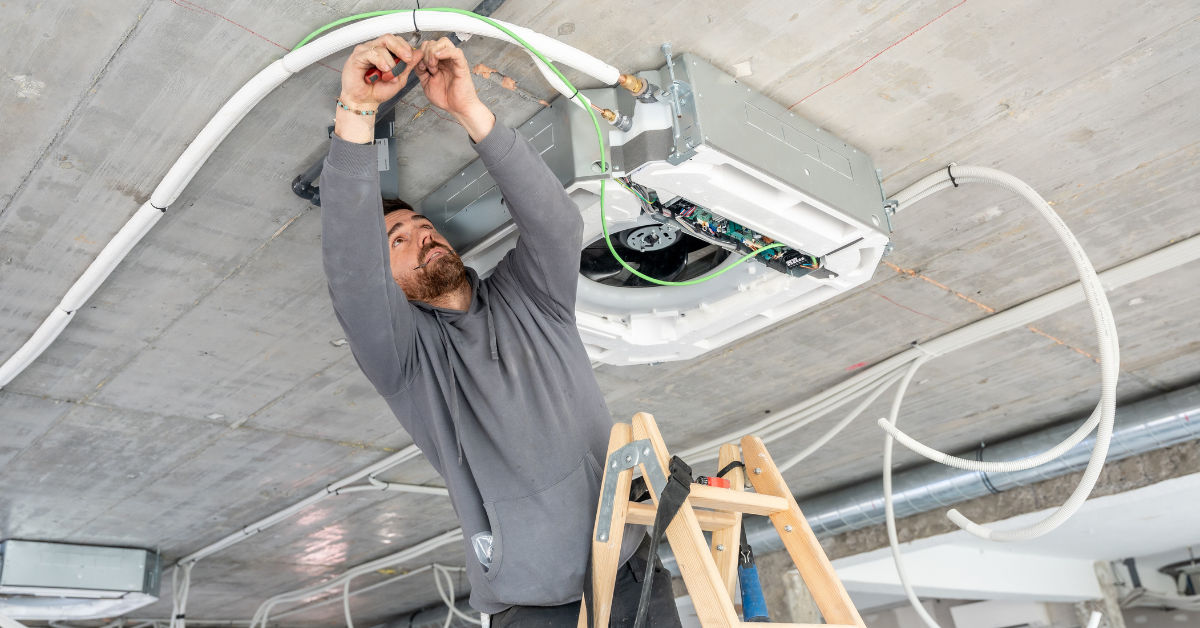
The demand for HVAC technicians continues to grow across Metro Atlanta, but finding experienced professionals has become increasingly difficult. Labor shortages are part of the challenge, but they are only one piece of a larger workforce issue.
Construction, commercial development, industrial growth, retirements, and increasingly complex HVAC systems are all influencing the market for skilled technicians. For employers, the impact goes well beyond an open position. When there are not enough qualified people to perform the work, workforce shortages can affect project capacity, customer commitments, service levels, and ultimately how quickly a business can grow.
That is why HVAC workforce planning is becoming less of a hiring issue and more of a business strategy.
Atlanta’s Growth Is Increasing Competition for HVAC Talent
Metro Atlanta continues to grow, bringing new residential communities, commercial properties, healthcare facilities, manufacturing operations, distribution centers, and other facilities that depend on HVAC systems.
New construction is only part of the demand. Existing facilities require ongoing maintenance, repairs, equipment replacement, system upgrades, and improvements to efficiency and building performance.
The result is a labor market in which mechanical contractors are not simply competing with one another for technicians. Manufacturing facilities, property management companies, healthcare organizations, commercial buildings, industrial employers and other operations may be looking for people with many of the same technical capabilities.
Nationally, the HVAC workforce remains highly specialized. According to the latest U.S. Bureau of Labor Statistics Occupational Employment and Wage Statistics data, approximately 409,670 heating, air conditioning and refrigeration mechanics and installers were employed across the country in May 2025.
For Atlanta employers, accessing the experienced portion of that workforce can become increasingly challenging as more organizations compete for the same skills.
When a Talent Shortage Becomes a Business Constraint
An unfilled HVAC position does not stay contained within the hiring department.
When a contractor does not have enough technicians, there may be fewer people available to respond to service calls or take on additional projects. When an industrial facility cannot find maintenance talent, existing employees may have to absorb additional responsibilities. When experienced employees leave unexpectedly, customer commitments and project schedules can become harder to maintain.
Eventually, workforce capacity can become business capacity.
A company may have opportunities to grow, new customers to serve, or additional projects available, but those opportunities are difficult to capture without enough skilled people to deliver the work.
Workforce depth also contributes to operational resilience. Employers with reliable talent pipelines are better equipped to respond to seasonal demand, unexpected turnover, new contracts, and business expansion without immediately falling into reactive hiring mode.
For growing HVAC employers, the workforce question is increasingly becoming: Do we have the people needed to support where the business is going next?
Experience Is Valuable, but Increasingly Difficult to Replace
Experienced HVAC technicians bring knowledge that develops over years in the field.
Troubleshooting complex equipment, communicating with customers, recognizing potential system issues, following safety procedures, and understanding how different systems perform under real operating conditions are skills that cannot always be replicated through classroom training alone.
As experienced technicians eventually leave the workforce, replacing that institutional knowledge takes time.
Employers that rely exclusively on finding another fully experienced technician whenever someone leaves may therefore find themselves repeatedly competing for a limited pool of candidates.
The alternative is to think further ahead about succession, knowledge transfer, and talent development.
Stop Waiting for the “Perfect” HVAC Candidate
When experienced technicians are difficult to find, waiting indefinitely for someone who checks every box can create another business problem.
Positions remain open while service demand, project schedules, and customer expectations continue moving.
That does not mean employers should lower their standards. It means they may need to become more intentional about determining which qualifications are truly necessary on day one and which capabilities can be developed.
Mechanical aptitude, reliability, problem-solving ability, curiosity, work ethic, and a willingness to learn can indicate significant long-term potential. A candidate who lacks one preferred qualification today may ultimately become a stronger employee than someone whose resume looks perfect but who has little interest in learning or growing.
Employers that become better at identifying potential can widen their available talent pool while creating employees who develop alongside the organization.
Developing Talent Is Becoming a Competitive Advantage
Recruiting experienced HVAC technicians will remain important, but employers cannot assume that enough fully developed talent will always be available exactly when they need it.
That makes internal workforce development increasingly valuable.
Apprenticeships, mentorship, technical training, knowledge sharing, and defined career paths can help employers turn promising hires into experienced technicians over time. Partnerships with technical schools and workforce development programs can also help companies establish relationships with emerging talent earlier.
Development can also create opportunities for existing employees. Technicians who can see a path toward greater responsibility, specialized skills, leadership, or higher-level technical work have more reasons to envision a future with the organization.
The strongest workforce strategy may therefore combine two approaches: competing effectively for experienced talent today while intentionally developing the talent the business will need tomorrow.
Retention Protects Capacity You Already Have
Recruiting becomes significantly harder when employers are simultaneously trying to replace experienced people who continue to leave.
That makes retention an important part of protecting business capacity.
Competitive compensation matters, but employees also evaluate leadership, communication, workload, career development, scheduling, workplace culture, and whether they see opportunities to progress.
For HVAC employers, retaining an experienced technician also means retaining customer knowledge, technical expertise, productivity, and experience that would take time to rebuild.
Understanding why good employees stay and why they leave should therefore be part of the same workforce conversation as recruiting.
Building an HVAC Workforce for Long-Term Growth
Competition for experienced HVAC technicians is unlikely to disappear. Employers that treat every vacancy as an isolated hiring problem may continue cycling through the same challenges.
A stronger approach is to view workforce planning as part of the organization’s broader growth strategy.
That means understanding future talent needs before positions become urgent, competing effectively for experienced technicians, recognizing potential in candidates who can be developed, creating pathways for employees to grow, and retaining the knowledge already inside the organization.
SKL’D helps contractors, mechanical service providers, manufacturers, and industrial employers across Georgia connect with skilled trades professionals who can support their operations and future growth. From experienced HVAC technicians and installers to maintenance mechanics and emerging skilled trades talent, we help employers think beyond the next opening and build stronger workforce pipelines.
With locations serving McDonough, Lithia Springs, and other Metro Atlanta communities, SKL’D understands the local workforce dynamics affecting skilled trades employers across the region.
Your workforce should support your growth, not limit it. Talk to SKL’D about building the HVAC talent pipeline your business needs for what comes next.